Why lit graphics still earn their place in a pop-up or in-store launch.
A lot of retail technology goes into knowing who walks past a shop and what they buy. The first job is still getting them to look up, and for pop-ups and in-store launches that usually comes down to one display.
I run Stand Central, which supplies exhibition stands and display graphics to UK businesses. More and more of our orders now go to shop floors, pop-up units and launch events as well as trade shows, and the thing retailers ask for most is an LED lightbox.
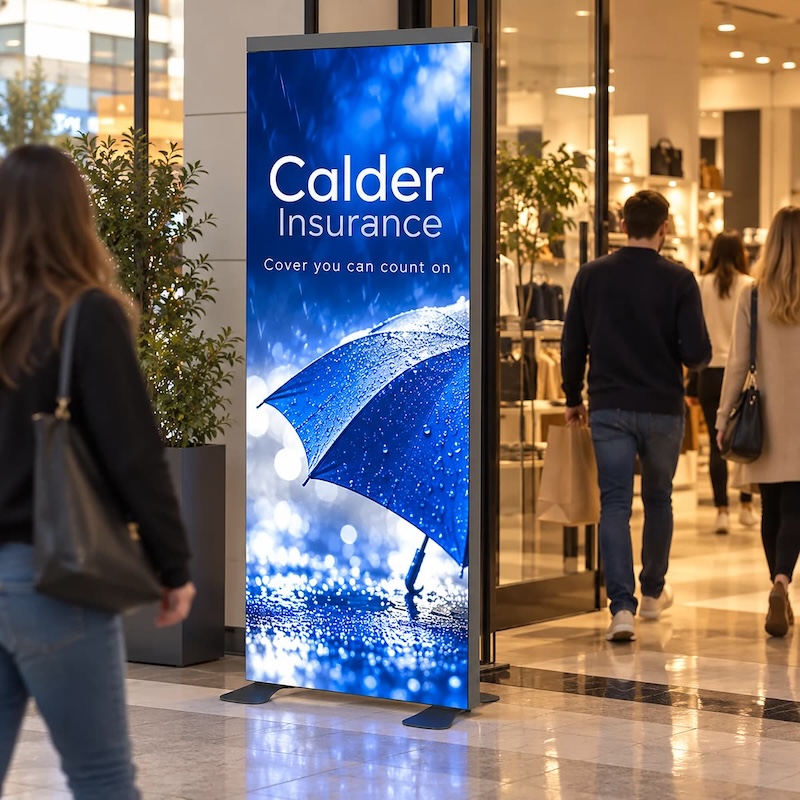
Why light works on a busy shop floor
Printed graphics compete with everything else on the floor: shelving, signage, screens and other promotions. A lightbox is lit evenly from behind, so the colours stay bright under shop lighting and the message reads from further away. It also looks finished, which matters at a launch where you want the brand to feel premium from the first glance.
Screens have their place, but they need content, scheduling and someone to look after them. A lightbox just needs a socket. For a short pop-up, that simplicity is worth a lot.

Pick the frame for the space, not the brochure
The mistake I see most is buying the biggest frame and then finding it doesn't fit. Before choosing anything, measure three things.
How much floor you can give up. Floor-standing lightboxes come out roughly 285mm to 400mm from the wall or floor line once assembled. Wall-mounted frames sit about 75mm deep, so in a narrow aisle or small unit they take almost nothing from the walkway.
Which way people walk past. Against a wall or in a window, one lit face is enough. In the middle of a store, a frame lit on both sides gets seen by people coming from either direction.
Where the sockets are. Every lightbox needs mains power nearby, and in a short-let pop-up unit that can decide where the display goes before anything else does.
If you want a quick way to decide, we've put together a guide on which lightbox suits a shop floor, with the sizes and depths side by side.

Change the graphic, keep the frame
Most retail lightboxes now take fabric graphics with a thin silicone edge that pushes into a channel in the frame. Swapping one takes a few minutes and no tools. That changes the maths for a retailer. The frame is a one-off cost, and every new promotion, seasonal launch or pop-up location only needs a new print.
It also means a lightbox bought for one launch can move to the next store, the next event or the window display afterwards. For brands running pop-ups in several locations, that reuse is where the value is.

Get the artwork right first
A lit graphic shows everything, good and bad. Keep the message short enough to read from a few metres away, put the key words in the top half where people actually look, and leave space around the logo.
Ask your supplier for a proof on the actual frame size before anything is printed, because what looks fine on a laptop can look crowded at two metres tall. Get those basics right and a single well-placed lightbox will do more for a launch than a room full of smaller signs.
About the author
Tom Watts is director of Stand Central, a UK supplier of exhibition stands, lightboxes and display graphics, with free artwork design or proofing on every order.

Comments (0)
No comments yet.