

Retail and logistics teams have spent the last decade wiring sensors into warehouses, vehicles and tills so they can see what is happening in real-time.
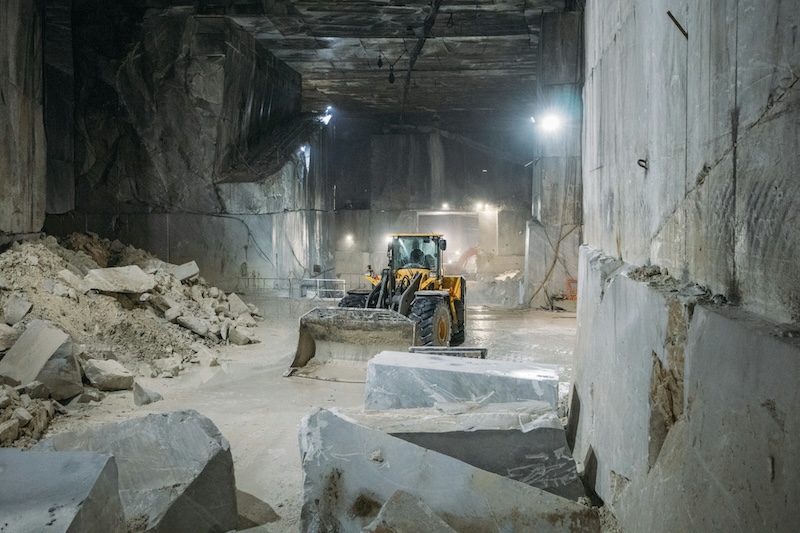
A similar shift is now under way in a less obvious place. Quarries and recycling yards, which produce the crushed stone, sand and gravel under every new store, warehouse and car park, are becoming just as data led.
Aggregate processing used to rely almost entirely on an operator's eye and experience. Today, much of it is measured, automated and monitored from a screen.
What Aggregate Processing Involves
Turning rock or demolition material into usable aggregate usually happens in three stages. It is crushed down to size, screened into graded products, and in many cases washed to remove clay and silt. Each stage used to be set up by hand and checked by looking at the output. Each one now has technology built in to make it more consistent.
Automation Inside the Crusher
Modern aggregate crushers do a lot of their own adjusting. Level sensors watch how full the crushing chamber is and speed the feeder up or down to match. The machine is not starved one minute and choked the next. On cone crushers, the gap that sets the size of the final product can be changed hydraulically from a control panel instead of with tools.
There is protection built in too. If a piece of steel or another uncrushable object gets in, relief systems let it pass without damaging the machine. That means fewer stoppages and a more even product from the start of a shift to the end.
Connected Machines and Remote Monitoring
Most new tracked crushers and screens now come with telematics. These systems report location, run hours, fuel use, throughput and fault codes back to an online dashboard.
For operators running machines across several sites, that data shows which plant is working hard and which is sitting idle. It also lets dealers spot a fault remotely and arrive with the right part, rather than making a first visit just to find out what is wrong.
Smarter Screening
Screening decides what a load of crushed material can be sold as, so accuracy matters. Today's aggregate screeners
allow operators to change conveyor speeds, deck angles and screen media quickly, so one machine can switch between products as orders change.
Some sites go further and use cameras above the conveyor belts to measure particle size in real time. Instead of waiting for a lab sample, the team can see straight away if a product is drifting out of specification and correct it before a full stockpile is affected.
Cleaner Power and Less Water
Fuel is one of the biggest running costs on any processing site. Many crushers and screens are now available with electric drives that can run from mains power where it is available, cutting diesel use, noise and on-site emissions.
Washing plants have changed too. Thickeners and filter presses recover most of the process water so it can be used again, and turn the leftover silt into a dry cake that is easier to handle. That reduces the need for large settlement ponds and the amount of fresh water a site has to draw.
Predictive Maintenance
Just as delivery fleets use vehicle data to plan servicing, processing plants now use sensors on bearings, motors and hydraulics to track temperature and vibration. Wear shows up in the numbers well before a part fails, so repairs can be booked into planned downtime rather than halting production on a busy day.
Why It Matters Beyond the Quarry
Better control means more consistent material, which matters to the contractors building new stores and distribution centres. It also supports recycling. The Mineral Products Association reports that recycled and secondary materials made up 31% of all aggregates supplied in Great Britain in 2023, or 74.3 million tonnes. Much of that relies on accurate crushing and screening of demolition waste.
The data side matters as well. Developers and occupiers increasingly want measured figures for fuel use and material sourced for their carbon reporting, and connected plant can provide them. For producers, choosing aggregate processing equipment with these features built in is becoming as much about information as it is about output.
A Data Led Industry
Aggregate processing will always be heavy, physical work. The difference now is that the machines are measured and connected much like a modern warehouse. That is changing how quarries and recycling sites are run.

Comments (0)
No comments yet.