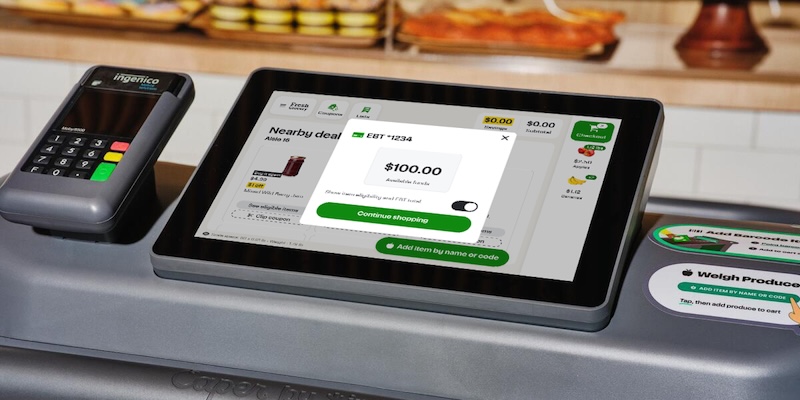
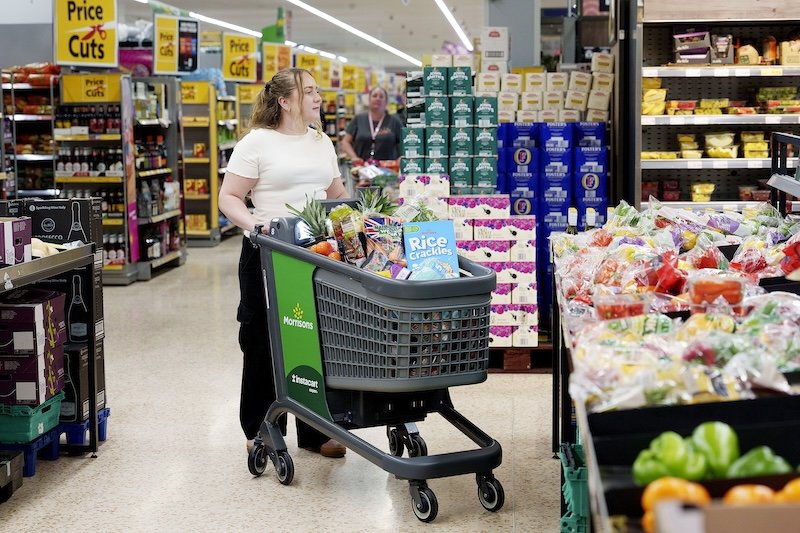
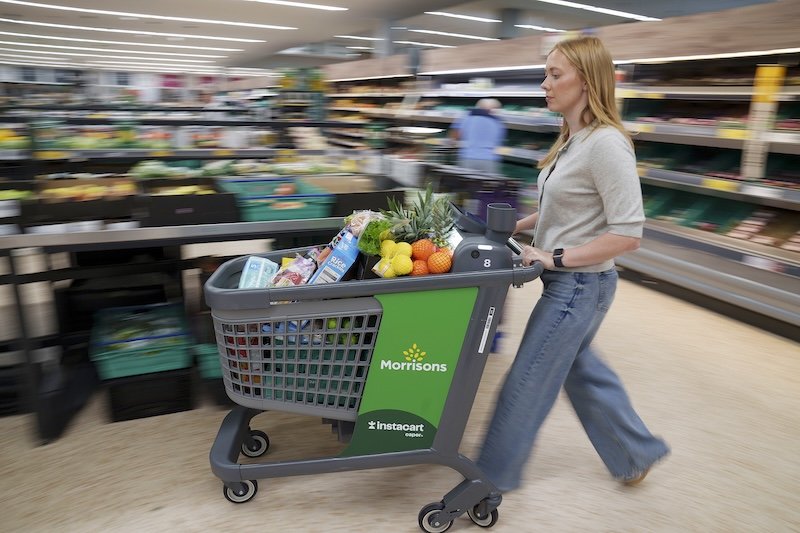
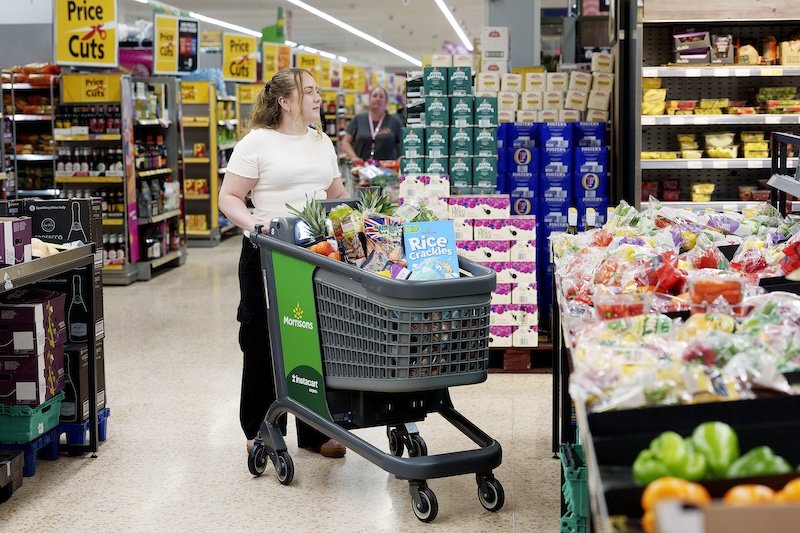
In July, we reported that Morrisons had launched Instacart’s Caper Cart smart trolleys at a Preston supermarket, marking North American firm Instacart’s first retail partnership in the UK for its AI powered solution.
Three months later, however, the retailer is pulling the trial as DoorDash gets set to acquire Instacart in a deal that values the grocery technology specialist at around $17 billion.
Separately, Instacart said in a regulatory filing last week that it would wind down its Caper Cart business by the end of the second quarter of 2027, expecting pre-tax charges of $55 million to $80 million related to the move.
Industry observers have been quick to write obituaries for the smart cart market over the past week. So are smart carts truly going away? The answer, according to Sandeep Unni, Retail Analyst at Gartner, lies in a detail that Instacart put out in its announcement: "While Caper is a great product, the business reality is that retailer adoption has not scaled quickly enough to justify our continued investment."
In a LinkedIn post, Unni said: "Translated, this points to a few structural challenges of an integrated hardware offering such as Caper. A Caper Cart can cost a grocer hundreds to thousands of dollars per cart plus maintenance, several orders of magnitude than a standard cart. Consequently, it proved that grocers are not keen to lock up capital into an expensive, proprietary hardware fleet."
He added: "A grocery store may have hundreds of shopping carts but only afford a few dozen Caper Carts, thereby limiting store level penetration. Grocers can solve the underlying checkout problem through alternative, less complex solutions without computer vision, sensor fusion and edge processing - retrofit smart cart handles, mobile scan and go apps, customer self-scanning solutions popular in Europe offer all offer much simpler, lighter tech alternatives and faster ROI."
Instacart's withdrawal is not a signal that smart carts have failed technically, Unni believes. Rather, it shows that the integrated smart cart model failed to become a sufficiently compelling enterprise scale investment in a segment with a razor thin margin profile.
"The market is shifting from "smart cart" to "smart store." Smart carts are simply one possible endpoint in a broader "store intelligence" strategy, not the strategy itself," he concluded.
2026 RTIH Innovation Awards
Smart carts will be a key focus area at the 2026 RTIH Innovation Awards.
Check out our 2026 shortlists and finalists here.
The awards, which celebrate global retail technology innovation in a fast moving omnichannel world, have now closed for entries. Our winners will be revealed at the 2026 RTIH Innovation Awards Ceremony, taking place at The HAC in Central London on Wednesday, 4th November.
The event will consist of a drinks reception, three course meal, awards ceremony presided over by award winning stand-up comedian, presenter, actor and broadcaster, Aurie Styla, and after party until 1am.
Click here to book your place at the 2026 RTIH Innovation Awards Ceremony on Wednesday, 4th November.
Comments (0)
No comments yet.