
Stock information matches what store associates find on the shelf just 46% of the time, according to research published by Scandit. This has led to only 8% of associates trusting store data completely, a figure that falls to 3% in the UK.
The company commissioned Sapio Research to survey 2,200 store associates online in September. All worked in physical stores for retailers with more than 1,000 employees across the US, Germany, UK, France, Italy, Canada, and Poland. The research covered grocery, mass merchant and department store, hypermarket and supercentre, DIY and home improvement, convenience, and drugstore and pharmacy formats.
“Inaccurate inventory data means compromised decisions,” says Samuel Mueller, CEO and Co-founder at Scandit. “This threatens return on investment, because AI cannot operate on flawed records."
The research shows that this gap is currently absorbed by labour. UK associates estimate they could each reclaim 3.96 hours a week (over five working weeks a year), if they had data they could trust. For a retailer employing 10,000 store associates, that equates to a £23 million per year labour cost.
When the system is wrong, UK associates are frustrated in their attempts to rectify the situation: only 41% correct records themselves (compared to a global average of 49%) and just 35% report they raise stock adjustments (compared to a global figure of 44%).
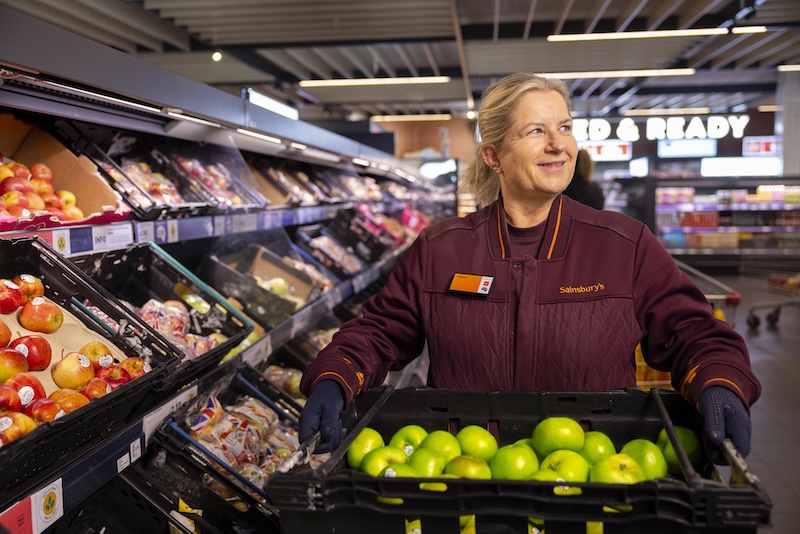
Amongst those UK associates who do take action, 36% bypass the official system entirely, and 58% use at least one informal method, including paper notes, team chats, personal phone photos and apps, or memory.
The result is a ‘shadow store’ in which vital information exists outside the records upon which head office, dashboards and AI systems rely. Scandit warns that retailers racing to deploy AI are running ahead of the data reality inside stores.
“Retailers do not have an AI adoption problem, as much as a store truth problem,” says Mueller. “Associates are spending valuable time repairing these gaps, yet much of that work disappears into unofficial tracking systems. Before retailers ask AI to make more decisions based on inaccurate store data, they need a shared, accurate view of what is actually happening on the shelf and across their stores.”
Scandit also says that rectifying this situation is a steep mountain to climb as associates’ trust in stock data is not linear. The survey highlights such trust stays low until the data is consistently very good.
Globally, only one in four associates say store data is accurate more than 70% of the time. Among associates who put accuracy up to 50%, approximately a quarter report high trust, but that figure barely moves until accuracy passes 70%, when it rises sharply.
“This is not a gradual improvement problem,” says Andrew Smith, Managing Partner, and Co-founder at ThinkUncommon. “Moving stock accuracy from 46% to 60% may look like progress in a board report and still change nothing on the floor. Trust only begins to move once accuracy clears 70%, and until then associates do what sensible people do: they check the shelf themselves and either correct the system or just do what they need to do to help the customer in front of them.”
The consequences of this lack of trust extend into the customer experience. Internationally, associates report spending an average of 4.1 hours each week handling customer questions that store technology should be able to answer and are asked to physically check whether an item is in stock 5.85 times a week on average.
In the UK, associates spend less time answering customer questions (2.8 hours per week) but face greater demands to physically check items are in stock, with an average of almost seven times per week and one in three saying they make such checks more than ten times a week.
Asked what would make inventory management workflows easier, UK associates responded with: “Better inventory system accuracy to reduce stock discrepancies on the shop floor”; “Stock to be updated when sold/scanned at tills”; “More communication from department leaders about what we have in stock (particularly at start of my shift)”; “I’d like to make sure people who are doing stock take actually care about getting the numbers right. When they do a bad job, it causes so many issues”.
2026 RTIH Innovation Awards
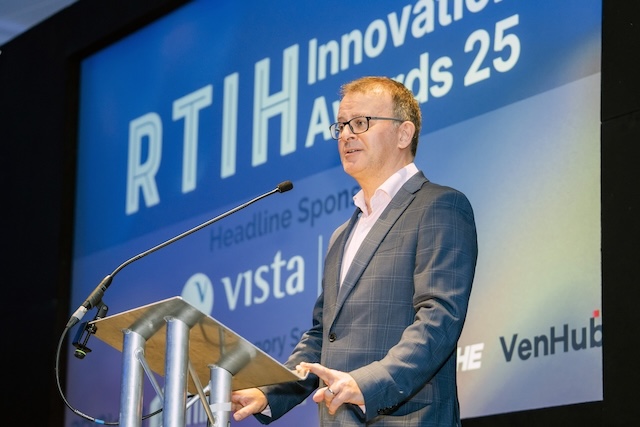
AI was a key focus area at the 2026 RTIH Innovation Awards.
The awards celebrate global retail technology innovation in a fast moving omnichannel world. Our winners were revealed at the 2026 RTIH Innovation Awards Ceremony, taking place at The HAC in Central London on Wednesday, 4th November.
The event consisted of a drinks reception, three course meal, awards ceremony presided over by award winning stand-up comedian, presenter, actor and broadcaster, Aurie Styla, and after party until 1am.

Comments (0)
No comments yet.