
By Sherazade Fetita, VP of Marketing at Liferay
For years, the retail CMO's job was clear: build the campaign, launch it, measure it, repeat. But customers stopped moving in straight lines long ago. They browse on their phones, buy in stores, return online and expect every interaction to feel connected.
AI is raising expectations further. Retailers can now generate campaigns in minutes, personalise communications and translate content across multiple markets almost instantly. But producing more content, faster, doesn't necessarily create a better customer experience.
A shopper might receive a personalised promotion for an unavailable product, discover their loyalty status hasn't been recognised or contact customer service only to repeat information already provided online.
These experiences expose a fundamental problem: marketing teams can personalise individual interactions, but disconnected technology makes it difficult to connect them.
At Liferay, we see this as a defining challenge for retail marketing leaders. Our Digital Experience Platform (DXP) helps organisations connect existing business systems with content management, personalisation, analytics and commerce capabilities, providing the foundation for more consistent customer experiences.
For CMOs, the opportunity is no longer simply to deliver better campaigns. It's to influence how the entire customer journey is connected.
From running campaigns to connecting customer experiences
Traditionally, marketing teams have focused on attracting customers, building brands and driving conversions. Once customers move into purchasing, account management or support, responsibility often passes to another department.
But shoppers don't experience retailers in departmental stages. They expect brands to recognise them whether they're browsing online, using an app, visiting a store or contacting customer service.
This requires CMOs to work more closely with IT, e-commerce and operations, ensuring the systems behind these interactions support a consistent experience.
Liferay DXP helps address this challenge by providing a digital experience layer that connects existing enterprise applications, customer information and content through integrations and APIs.
Rather than replacing every existing system, retailers can bring together the capabilities needed to deliver connected digital journeys while building on their technology investments.
The real shift is not simply towards greater automation, but towards giving CMOs more influence over how customer experiences are designed and delivered across the business.
Customer intelligence must come before content
AI has transformed how quickly marketers can produce content, but its effectiveness depends on the quality and accessibility of the information behind it.
Retailers hold valuable customer data across e-commerce platforms, loyalty programmes, CRM systems and customer service applications. When these remain disconnected, AI risks producing communications that appear personalised but fail to reflect a shopper's actual circumstances.
Liferay DXP combines content management, personalisation and analytics capabilities, while its integration architecture enables organisations to connect customer-facing experiences with existing business systems.
This allows marketing teams to use audience segmentation and behavioural insights to tailor digital content and journeys. Liferay's commerce capabilities can also support personalised product discovery and purchasing experiences.
The benefit is not simply greater efficiency. It's the opportunity to make marketing more relevant by connecting what a retailer knows about its customers with what it delivers.
Sherazade Fetita: Ultimately, customers don't distinguish between a marketing campaign, an e-commerce platform and a service interaction. They experience one retailer. The future role of the CMO is to help make sure it feels that way.
Lost in translation: when personalisation falls short
This challenge is particularly important for international retailers.
Liferay’s 2026 Website Localization Report, which surveyed 800 US adults who use websites and apps in languages other than English, found that 56% had abandoned a purchase because a digital experience felt poorly adapted to their language.
More revealingly, 54% of respondents who rated brands' translations as good or excellent had still abandoned a purchase because of poor localisation. Meanwhile, 48% had chosen a competitor offering a better-adapted digital experience.
The words may have been correct, but the wider experience wasn't.
Customers also expect relevant product information, pricing, delivery options and services.
Liferay's multi-site management, localisation and content capabilities help organisations manage digital experiences across different markets, while integrations with commerce and other systems can support accurate, market-specific information.
AI can accelerate translation and content adaptation, but the underlying technology must ensure those experiences remain relevant and consistent.
Giving marketing teams greater control
Delivering connected experiences also requires greater autonomy for marketing teams.
Historically, launching landing pages, adapting content or updating digital journeys could involve multiple handovers between marketing, IT and external agencies.
Liferay DXP provides reusable templates, content workflows, publishing tools and multi-site management capabilities, enabling marketers to manage more of their digital experiences while IT retains oversight of integrations, architecture and security.
Importantly, this flexibility doesn't have to come at the expense of existing technology investments.
The customer journey starts behind the scenes
A seamless shopping experience doesn't begin when a customer clicks 'buy'. It starts much earlier, with the suppliers, product information and systems working behind the scenes. And when those connections break down, even the most sophisticated marketing campaign can only do so much.
Europe’s leading premium beauty Douglas recognised this challenge as part of its digital-first transformation. With around 2,000 stores, a growing online marketplace, boasting over 160,000 beauty and lifestyle products across online shops, and hundreds of suppliers, connecting the wider retail ecosystem was essential.
Working with Liferay, Douglas created a centralised supplier portal that brought previously fragmented processes, communications and business intelligence into one digital environment. Suppliers could access sales insights, manage onboarding tasks and exchange information securely, while existing enterprise systems were connected through Liferay's integration capabilities.
The results were significant:
Supplier onboarding became 50% faster, the portal supported more than 800 suppliers, and the solution was delivered in just six months.
For retail CMOs, the lesson goes beyond operational efficiency. Great customer experiences depend on what happens long before a shopper reaches the checkout. Connecting the systems and people behind the brand creates a stronger foundation for the joined-up digital journeys that marketing leaders increasingly need to deliver.
Governance is now a marketing responsibility
Greater autonomy also brings greater accountability. As AI becomes embedded in content creation, translation and customer engagement, marketing leaders must understand how information is accessed, managed and used.
An inaccurate product description can damage trust. A personalised offer based on outdated information can frustrate customers. An AI assistant with inappropriate access permissions can introduce more serious risks.
Liferay's role-based permissions, approval workflows and governance capabilities help organisations maintain control over digital content and access. Its AI capabilities also create opportunities to incorporate automation into content and digital experience workflows, subject to appropriate oversight. The objective is to give marketing teams greater flexibility without sacrificing consistency, security or accountability.
The next chapter for the retail CMO
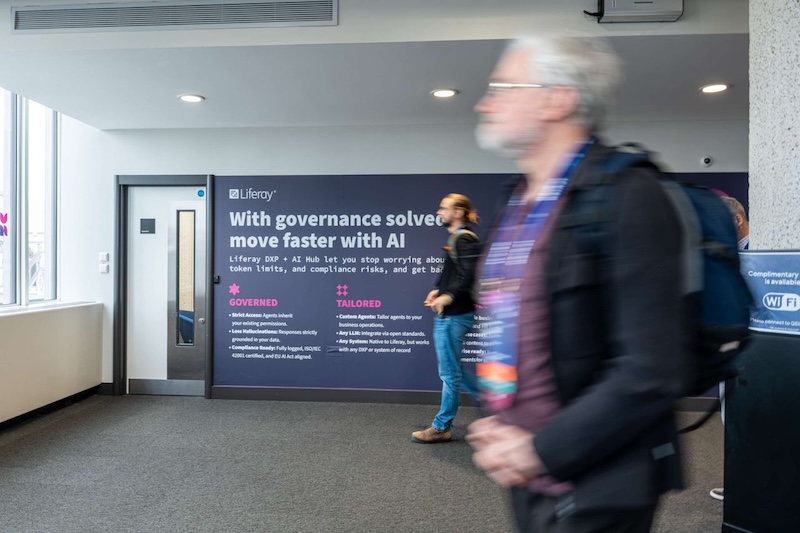
The changing relationship between marketing, technology and customer experience was a central theme at Liferay's Customer Summit UKI, themed Authentic by Design, in London on 4th November.
I discussed how CMOs can take greater ownership of connected customer journeys, from customer intelligence and content creation to personalisation and ongoing engagement. Laura Ellis, Head of Technology Forecasting at the BBC, also explored AI governance and emerging technologies.
For retail marketing leaders, this isn't about taking over IT, e-commerce or customer service. It's about ensuring these functions work towards a shared understanding of the customer.
AI is accelerating this transformation, but it isn't the strategy itself. Retailers need connected, adaptable technology that allows them to turn customer intelligence into relevant experiences.
That's the opportunity Liferay DXP is designed to support: helping businesses connect their existing systems, empower marketing teams and deliver more consistent digital experiences.
Ultimately, customers don't distinguish between a marketing campaign, an e-commerce platform and a service interaction. They experience one retailer.
The future role of the CMO is to help make sure it feels that way.
About Sherazade Fetita
Sherazade is VP of Global Field and Partner Marketing, leading field, partner, and customer marketing programs worldwide. She works closely with Sales and GTM leadership to connect marketing to revenue goals and serves as a trusted advisor to executive leadership on translating global strategy into local-market impact.
With a career spanning marketing, Sherazade has firsthand experience navigating the realities marketers face every day, from driving pipeline and aligning with Sales to proving marketing’s value at scale. In this session, she brings that perspective to the conversation, exploring the challenges marketers face today and how the right approach can help create greater business impact.


Comments (0)
No comments yet.